When I opened my eyes this morning, I realized we had finally reached those days when the sun reclaims its power. Even with my eyelids shut tight, the light found its way through the tiniest gaps, politely whispering that it was time to wake up. Naturally, waking up without the jarring jolt of an alarm clock feels incredibly satisfying. It is a rare kind of joy in our modern lives.

Breaking the Routine
For the past few months, my relationship with running has been going through a bit of a shift. If we look back at the previous year, I used to wake up early almost every single day, including weekends. I would quickly throw on my running gear and dash outside, often hitting the street before my body was even fully awake.
The first half hour of those early morning runs usually kicks off with an internal debate, “Why am I running?” Following closely behind is the inevitable second question, “Am I really sure about my motivation?” Obviously, the harsh weather conditions of the season dictate how intense that debate gets. But before my mind can even reach a verdict, my legs find their rhythm, my mind clears, and the first signs of the “Runner’s High” start to kick in, just like they always do. And so, the seasons roll on.
Once back home and fresh out of the shower, you find yourself enjoying almost every ordinary activity far more than you typically would. Take lounging in front of the TV, for example. I’m not even exaggerating. Spending a whole weekend just lying around at home usually starts to feel uncomfortable after a while, especially on days when the sun and the shade of the trees are practically begging you to step outside. But after a solid run, a good shower, and a fulfilling meal, simply doing nothing in front of a screen feels incredibly rewarding. The same goes for plenty of other activities.
Lately, though, I’ve been somewhat distant from those peaceful mornings. I’ve shifted my runs to the evenings. Even on weekends, the earliest I head out is noon. I’ve also cut my weekly mileage by about 30-35%, I rarely do speed work, and I’ve stopped hitting the trails entirely. There is a reason for all of this, of course, and it has nothing to do with falling out of love with running. On the contrary, it’s about keeping pace with an entirely different marathon in my life.
The Shared Energy Pool
A few months ago, I changed jobs. This meant leaving behind a comfort zone I had built over the last eight years to navigate entirely new, demanding waters that offered significant room for growth. From the moment this transition became a reality, I knew I had to reassess my priorities. One major reason is that career shifts of this magnitude demand huge amounts of time and mental bandwidth.
The physical and mental resources our bodies can offer are constrained by the same biological limits. Whether your work requires physical exertion or no physical effort at all, every ounce of energy you spend drains the very same “shared energy pool.”
Let me explain this with a simple analogy. In many sports, one of the primary culprits behind frequent injuries is the state of being “overtrained.” It happens when the accumulated acute workload meets the continuous strain you keep putting on your body, causing it to fail its daily recovery protocols, which naturally leads to injury. So, working excessively hard, especially in mentally taxing desk jobs, not only harms your overall well-being in a way many white-collar workers aren’t familiar with, but it can equally sabotage your chances of reaching your goals.
Overtraining and the Balancing Act
Foreseeing exactly this, I figured I had to balance running and my career transition as carefully as possible.
On one side were the demanding preparations for upcoming races, like strict diets, grueling workout tracking, and the physically and mentally draining reality of race prep. On the other side was the already exhausting process of adapting to a new job environment. I knew that running these two heavy workloads in parallel would slowly chip away at my connection with running. Rather than adding a positive spin to my life, it would drag me down. So, shifting my core strategy to shorter, flatter, and more balanced runs became the only logical path forward.
Completely giving up running during this period wasn’t an option either; I wasn’t buying the idea that quitting would magically leave me with a surplus of energy. Running brings too much excellence into nearly every other aspect of my life. It acts as a catalyst, keeping me deeply motivated and engaged with the world around me.
What I expected to experience during this phase was a more relaxed running routine, simply because I had stripped away the long weekend trail runs and the intense speed workouts. And at first, that’s exactly what happened. Fresh off a heavy race prep block, my body welcomed the reduced volume and intensity with open arms. Everything felt easy.
However, I forgot that just as you can adapt your body to long distances and high speeds, you can adapt it in the opposite direction too. A couple of months in, the distances that were supposed to feel like a breeze started feeling tiring. I accepted this as part of the adaptation. It was a humbling reminder that my mind, so fiercely wired for constant improvement, completely failed to predict this outcome. While my inner world and body were trying to adapt to this new, slower-paced routine, the outside world continued with its own ruthless cycle.
A Brief Ceasefire
Whether I spent last winter pushing my weekly volume all the way up, or this winter cutting it all the way down, one thing remained constant: I had to do most of my runs against heavy, relentless winds. It didn’t matter how slow I ran; that wind was always a punishing companion.
Just before the intense summer heat arrives to make running miserable, and right after the harsh winter finally lets go, we get a tiny, perfect window of one or two months where we can run outside at any hour we please. As I write this, we are exactly in that brilliant spring window.
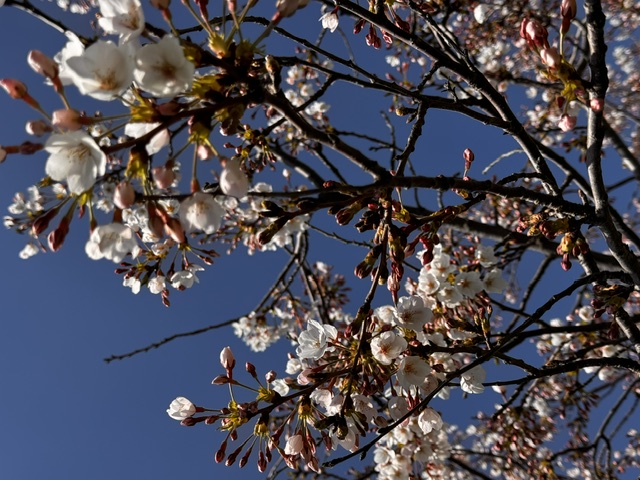
That was exactly what I felt during my run this morning. The violent rustle of the wind against my rain jacket had faded; the drops soaking it weren’t rain, but sweat falling from my hair. And the sounds I heard weren’t waves violently crashing against the concrete shore. They were the chirping of birds, the chatter of people, and the quiet steps of street animals. Right there and then, I realized what an incredibly pleasant moment I was living in. Running is already a deeply enjoyable experience. But when you survive the brutality of winter, you inevitably spend the first few weeks subconsciously bracing for impact, running defensively against sensory discomfort. That’s why your first instinct upon waking up on a run-day is to immediately check the weather app to see the wind speeds and gusts.
When all of that subsides and nature finally surrenders to the mercy of spring, it feels like a brief ceasefire. You know you have to enjoy it, because in a few weeks, the punishing conditions of summer will take over.
Fortunately, an unchangeable truth always reminds itself: Every season teaches its own run.